Yes — you can hydroseed over existing grass. It's called overseeding, and it works best when you mow the existing lawn as short as possible and loosen the soil by raking or aerating. That gives the hydroseed mixture good contact with the soil, which is what germination needs.
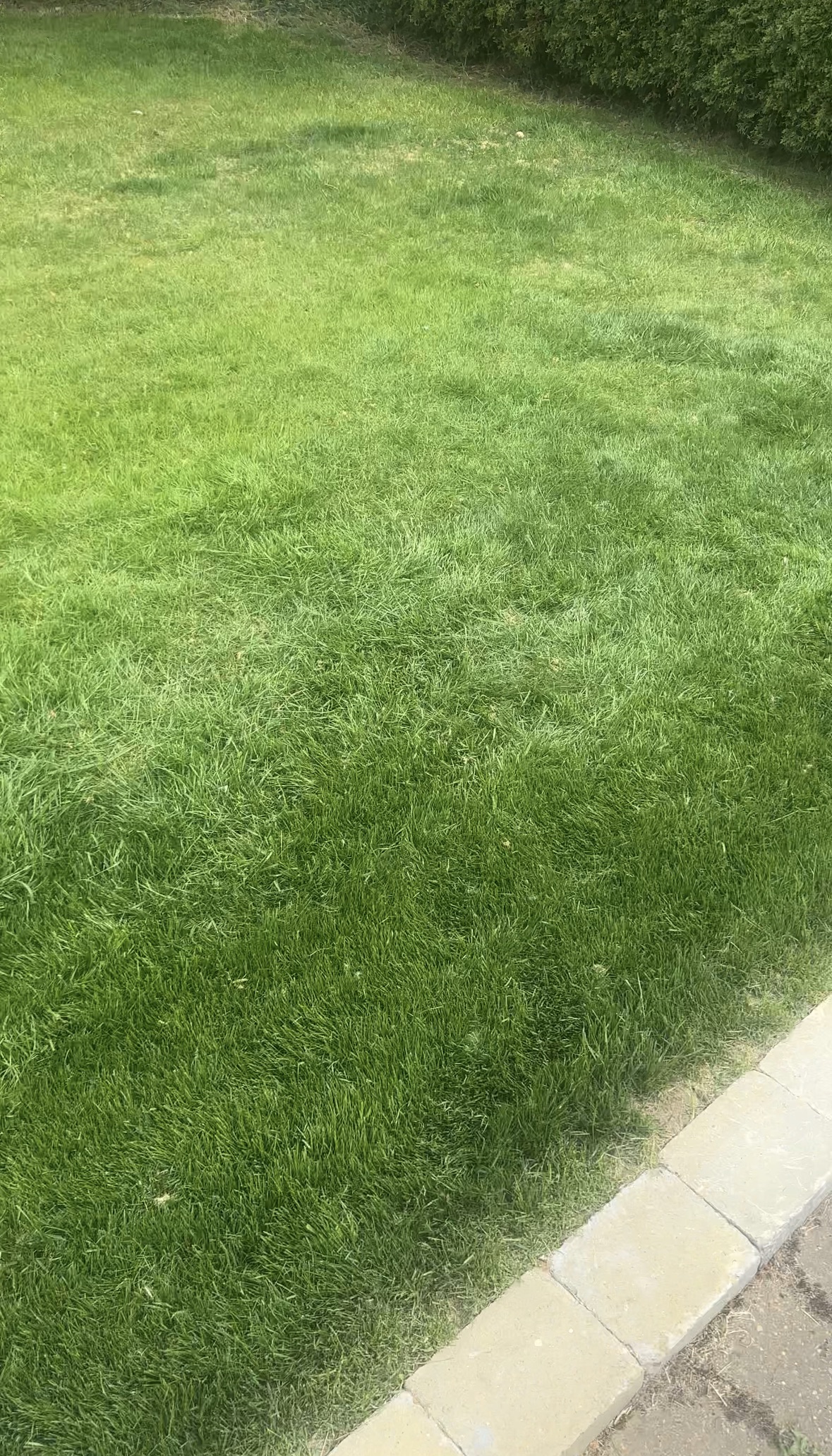 ↖ Existing lawn
Overseeded ↘
↖ Existing lawn
Overseeded ↘
What is overseeding?
Hydroseeding over an existing lawn is called overseeding: spraying new grass seed over grass you already have to thicken it up and fill in thin or bare areas. Every seed you spray is trying to grow into a real, living plant — just like a tomato or a sunflower — and it can only do that where the seed reaches soil. We can spray hydroseed on top of concrete, but it won't grow a lush lawn without that soil contact.
Overseeding can be less effective than seeding on bare soil, because the existing grass roots compete with the new seedlings for water and nutrients. Mowing low and exposing the soil is what tips the odds back in the new seed's favor.
Why do you have bare spots?
Grass grows in fresh soil, so bare spots are usually a soil problem, not a seed problem. If grass won't fill in somewhere, that spot is typically telling you it needs more, less, or more balanced nutrients, better drainage, or a different base material (soil, sand, or compost instead of compacted clay or rock).
Treat your lawn like any other crop: the better the soil, irrigation, and drainage, the better the results. Adding fresh topsoil before you overseed is almost always worth it — it gives new seed a clean, nutrient-rich bed to root into.
How to overseed an existing lawn
This is the lighter path — good when your lawn is mostly healthy but thin or patchy and you don't want to tear it all up:
- Mow low: Cut the existing grass as short as possible so new seed can reach the soil.
- Rake / dethatch: Loosen the surface and clear thatch so the soil can breathe and seed makes contact.
- Add topsoil: Spread about ¼–½ inch of fresh topsoil or compost over thin and bare areas.
- Hydroseed: Hire our crew to spray your new seed, fertilizer, and mulch in one pass.
- Water lightly and often: Keep the surface damp while seeds germinate.
- Taper off: As the lawn fills in, water deeper but less frequently.
Overseed or start over?
Not sure which path is right for your lawn? Use this as a quick guide:
| Your lawn looks like… | Best approach |
|---|---|
| 60%+ healthy grass, just thin or patchy | Overseed (mow low + topsoil, then hydroseed) |
| Mostly dead, heavily weedy, or compacted | Kill it and start over (see below) |
When to start over instead
If the existing grass is in poor condition, the best process is to kill the existing grass and start fresh:
- Till: Fully till up the current lawn.
- Soil: Bring in 2–4 inches of new topsoil and till again.
- Flatten: Roll the soil to prevent a lumpy surface.
- Rake: Seeding works best after raking, since the soil can breathe better.
- Hydroseed: Hire our crew to spray your new lawn.
- Water: Keep the area wet — watering lightly and often.
- Wait: As time goes on you can water less often with more water.
Best time to overseed in the Pacific Northwest
In the PNW, early fall is the best time to overseed: the soil is still warm enough for fast germination, the air is cooler, and fall rains help keep seed moist. Spring is the next-best window, once the soil warms up. Either way, consistent moisture and good drainage matter more than the exact date.
Want help picking the right approach for your yard? Learn what hydroseeding is, see how it compares in sod vs. hydroseeding, check current hydroseeding prices, or read whether hydroseeding is worth it.
FAQ
Will hydroseed kill my existing grass?
No. Overseeding adds new seed on top of your existing lawn to thicken it — it doesn't kill the healthy grass that's already there. If you want to fully replace a poor lawn, that's a separate kill-and-restart process.
How short should I mow before overseeding?
Mow as short as possible. The lower you cut the existing grass, the more easily new seed reaches the soil and makes the contact it needs to germinate.
Do I need to add topsoil to overseed?
It's not strictly required, but it helps a lot. A ¼–½ inch layer of fresh topsoil or compost gives new seed a clean, nutrient-rich bed and improves results, especially in bare or compacted spots.
How long until an overseeded lawn fills in?
With consistent watering, you'll usually see germination within 1–3 weeks and noticeable fill-in over the following month. Bare spots with poor soil take longer, which is why soil prep matters.
What's the difference between overseeding and reseeding?
Overseeding means spraying new seed over an existing lawn to thicken it. Reseeding (or starting over) means removing the old lawn and seeding bare, prepared soil. Choose based on how much healthy grass you still have.
Soon you will have a gorgeous lawn.
The Better Way to a Luxurious Lawn
Hydroseeding is a low cost option to Sod with Custom Mixes available for all types of turf
